
Dauphin County Genealogy Records
Dauphin County genealogy records go back to 1785 when the county was formed from Lancaster County. The county seat is Harrisburg, the capital of Pennsylvania, which means researchers have access to both county-level records and major state repositories in the same city. The Register of Wills holds estate files from 1785, and the Recorder of Deeds maintains land records also from that date. The Dauphin County Courthouse is open Monday through Friday from 8:00 AM to 4:30 PM. Researchers searching Dauphin County family history will find a broad range of resources close together in Harrisburg.
Dauphin County Genealogy Quick Facts
Dauphin County Courthouse Records
The Dauphin County Courthouse is open Monday through Friday from 8:00 AM to 4:30 PM. The county was created on March 4, 1785 from Lancaster County and covers 557.7 square miles. The Register of Wills maintains estate records and probate files from 1785, spanning 240 years of family history. The Recorder of Deeds holds land records from the same date. The Prothonotary serves as clerk of the civil division of the Court of Common Pleas, and the Clerk of Courts maintains criminal court records. Each of these offices can be reached through the Dauphin County government portal at dauphincounty.gov.
Estate records from the late 18th century in Dauphin County are among the oldest locally-held probate files in south-central Pennsylvania. A will from the 1790s can name grandchildren and in-laws, providing genealogical depth that takes census research many years to replicate. Researchers should note that Dauphin County's location as the state capital means that some families active in state government also appear in state-level records held at the Pennsylvania State Archives just blocks away from the courthouse.
The Dauphin County government website provides access to public records information, office contacts, and online search tools for the county's genealogy records.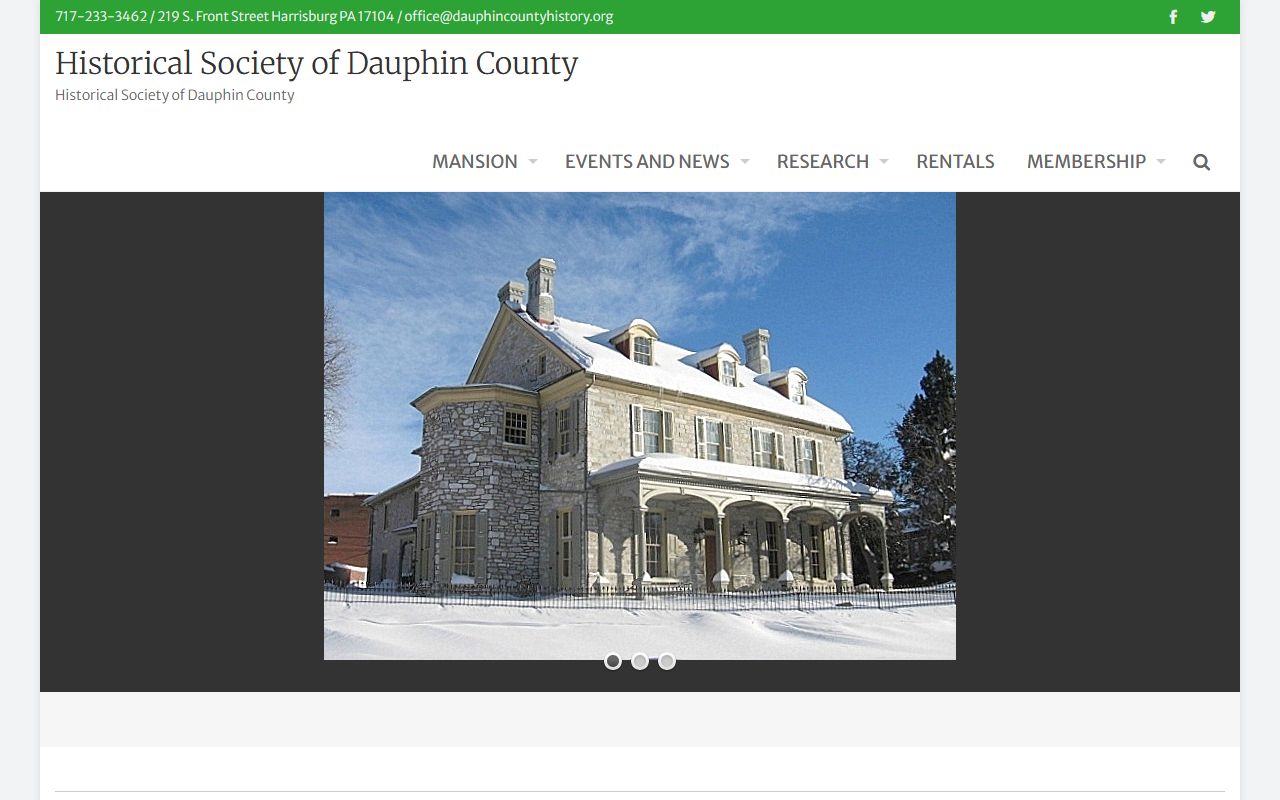
The county's online portal helps researchers identify which office holds the records they need before making an in-person visit to the Harrisburg courthouse.
Historical Society of Dauphin County
The Historical Society of Dauphin County was founded in 1869 in Harrisburg and has one of the most impressive collections in central Pennsylvania. It is located at the John Harris-Simon Cameron Mansion, a National Historic Landmark at the heart of Harrisburg. The mansion was built around 1766 by John Harris, Jr., founder of Harrisburg. Simon Cameron, who served as Lincoln's Secretary of War, owned the property from 1863 to 1941. The historic setting adds meaning to the genealogical research conducted there.
The Alexander Family Research Library at the historical society holds 3,700 books on local history and genealogical data covering Dauphin County and the region. The archives collection contains 20,000 items including historical records spanning centuries of county history. The photo archives contains more than one million images dating from the 1850s to the present day, making it one of the largest local photograph collections in Pennsylvania. Library hours are Tuesday through Friday and the second Sunday of each month from 1:00 PM to 4:00 PM. Contact the society at (717) 233-3462 or library@dauphincountyhistory.org. Visit dauphincountyhistory.org for research planning information.
The Historical Society of Dauphin County maintains its research library at the nationally registered Harris-Cameron Mansion, where researchers can access thousands of volumes and archival materials on Dauphin County families.
The society's combination of a large library, archival collection, and a landmark building make it an exceptional destination for Dauphin County genealogy research.
Note: Library hours at the Historical Society of Dauphin County are limited, so plan your research visit in advance and confirm current schedules by calling or emailing the society before you go.
Dauphin County Vital Records
Early vital records in Dauphin County from 1893 to 1905 are held at the county courthouse. Records from 1906 onward are managed by the Pennsylvania Department of Health under 35 P.S. §450.801. Because Harrisburg is a branch office location for the Division of Vital Records, researchers in Dauphin County may be able to access state vital records services locally. Birth and death certificates can also be ordered online through VitalChek or by mail to the Division of Vital Records for $20 per certificate.
Marriage licenses in Dauphin County date from 1885 and are held at the Register of Wills office at the courthouse. Under Act 127 of 2016, described at the Library of Congress vital records guide, records more than 105 years old are now open to any researcher. This means Dauphin County marriage records from the late 1800s and early 1900s are publicly accessible without close family documentation. Early birth and death records from the county period are certified copies available for $5 to $10 depending on the type of record.
Dauphin County Library System Genealogy Resources
The Dauphin County Library System (DCLS) at dcls.org includes multiple branch locations and robust research tools. The library system is a FamilySearch Affiliate Library, which gives patrons access to most FamilySearch center-only genealogy databases. These databases include records that are not freely available online and cover a wide range of time periods and record types for Pennsylvania families. POWER Library provides additional high-quality research resources through the Pennsylvania state library network.
The library system also provides access to global and historical news archives, financial databases, and language learning tools. Interlibrary loan services help researchers access materials not held locally. For Dauphin County genealogy, the library complements the historical society's research collection with digital database access that is especially useful for census records, city directories, and newspaper research. The combination of the DCLS, the Historical Society of Dauphin County, the county courthouse, and the Pennsylvania State Archives all in Harrisburg makes this one of the best single-city research destinations in the state.
Pennsylvania State Archives and Dauphin County Research
The Pennsylvania State Archives is located in Harrisburg, the Dauphin County seat. This proximity means Dauphin County researchers can visit both the courthouse and the State Archives in the same trip. The State Archives holds statewide collections that are not available at the county level, including the complete land warrant and survey records, military records from the Revolutionary War through the 20th century, and passenger arrival records for early immigrants. Under 37 Pa.C.S. § 305.3, the State Archives is required to preserve and make accessible historical public records, which supports ongoing research into Dauphin County families.
The ARIAS database at the State Archives is searchable online and may include some Dauphin County records. Under 65 P.S. §§ 67.101, state records are public documents subject to the Right to Know Law. Researchers with Dauphin County ancestors who served in state government or military positions may find significant materials at the State Archives that complement what is available at the county level.
Cities in Dauphin County
Dauphin County includes Harrisburg, the state capital and county seat, along with Steelton, Middletown, and several other municipalities. Genealogy records for all of Dauphin County are maintained at the courthouse in Harrisburg, and the Historical Society and State Archives nearby add to the research options available in the county.
Nearby Counties
Dauphin County is at the center of south-central Pennsylvania and borders seven other counties. Many Dauphin County families have roots that extend into these neighboring areas, so checking multiple county records can deepen your research.